
Last updated November 25, 2026
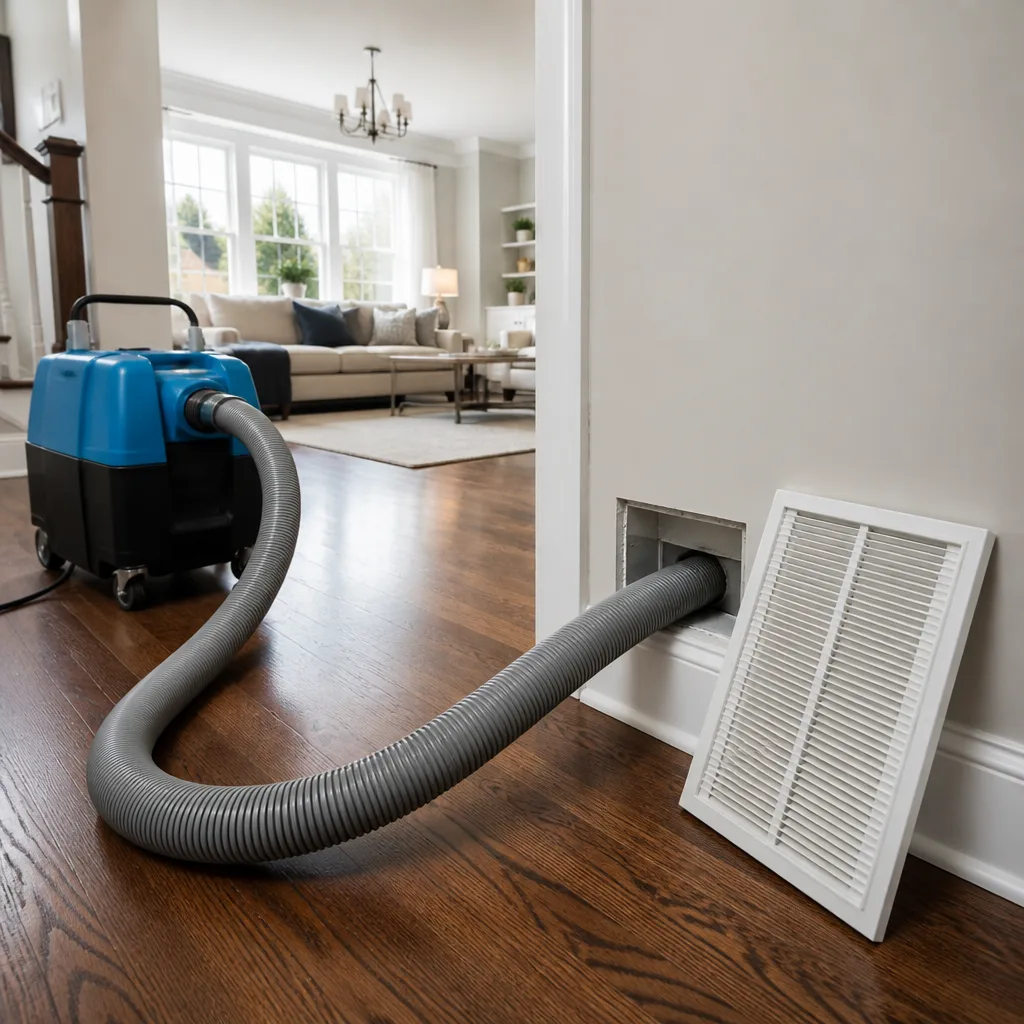 Whole-home duct cleaning
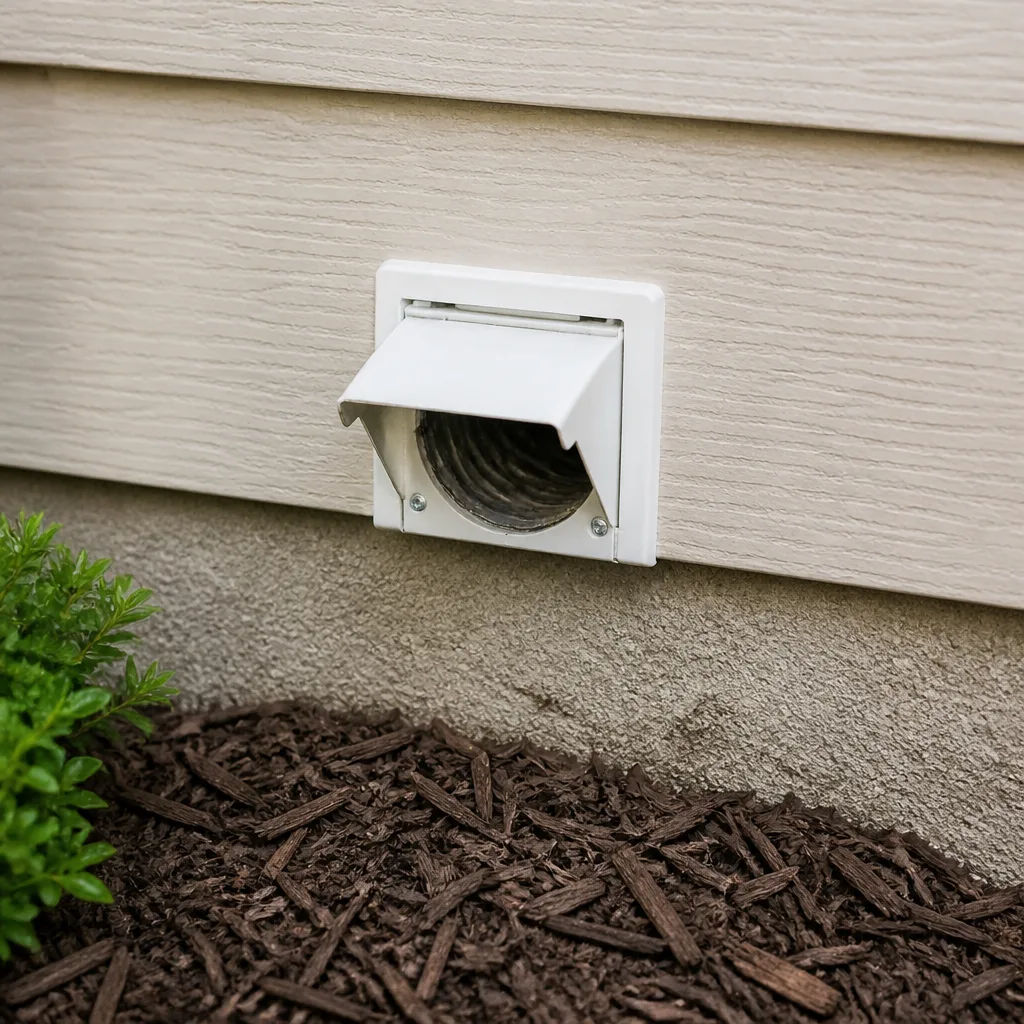 Dryer vent cleaning
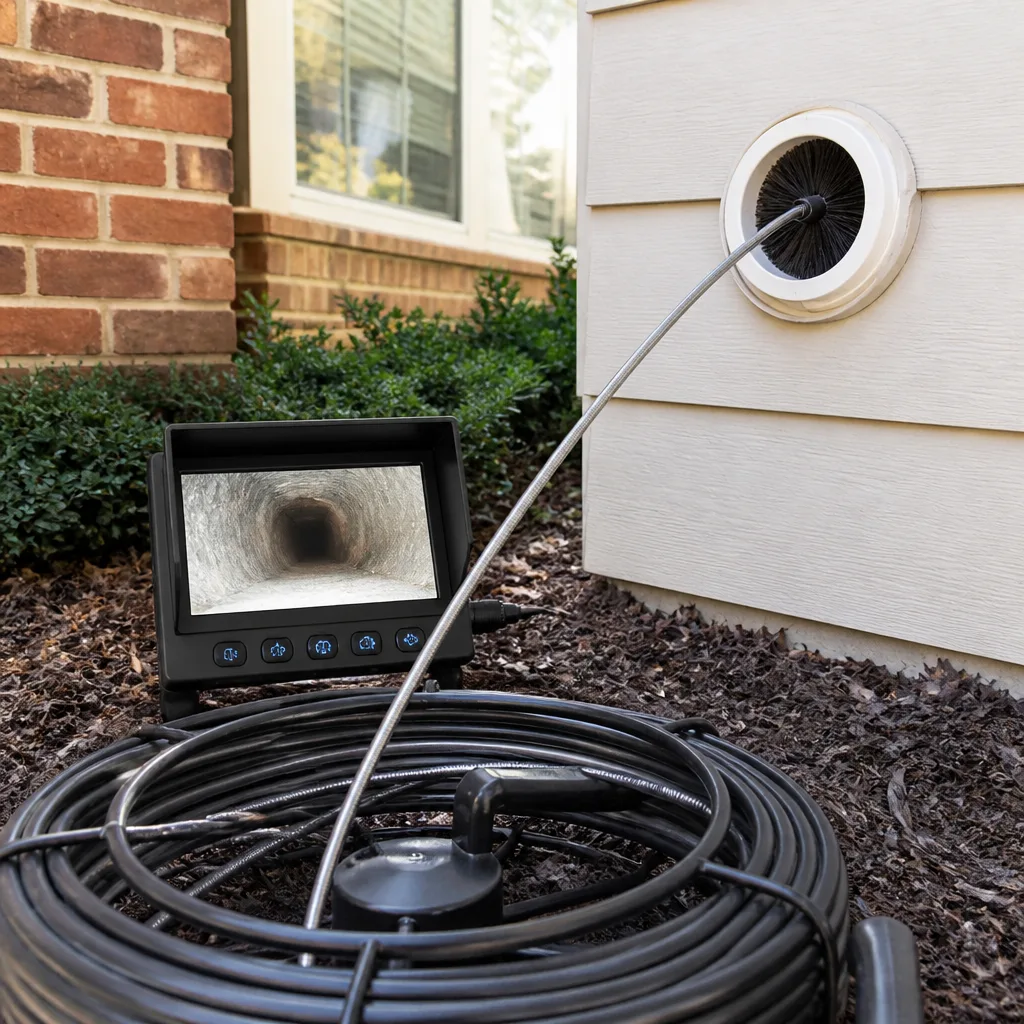 Camera inspection
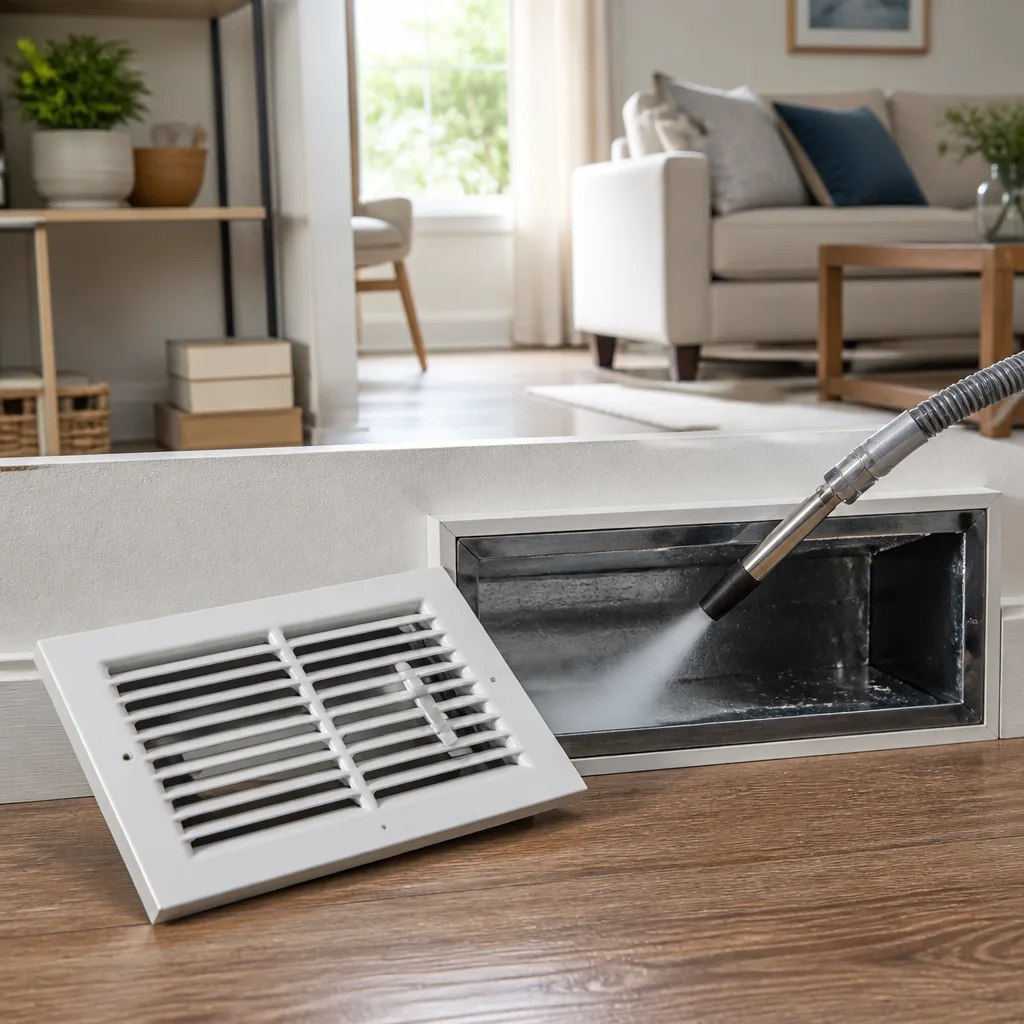 Sanitizing & deodorizing
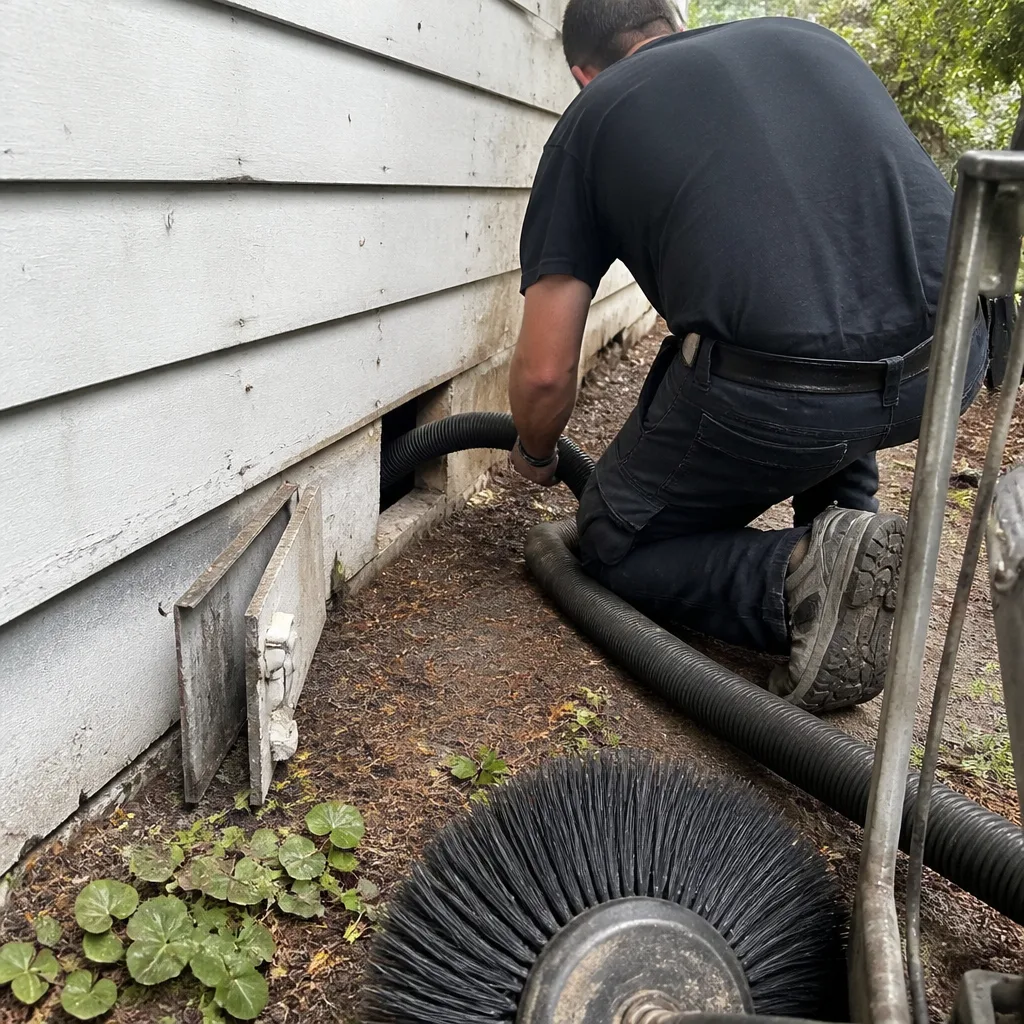
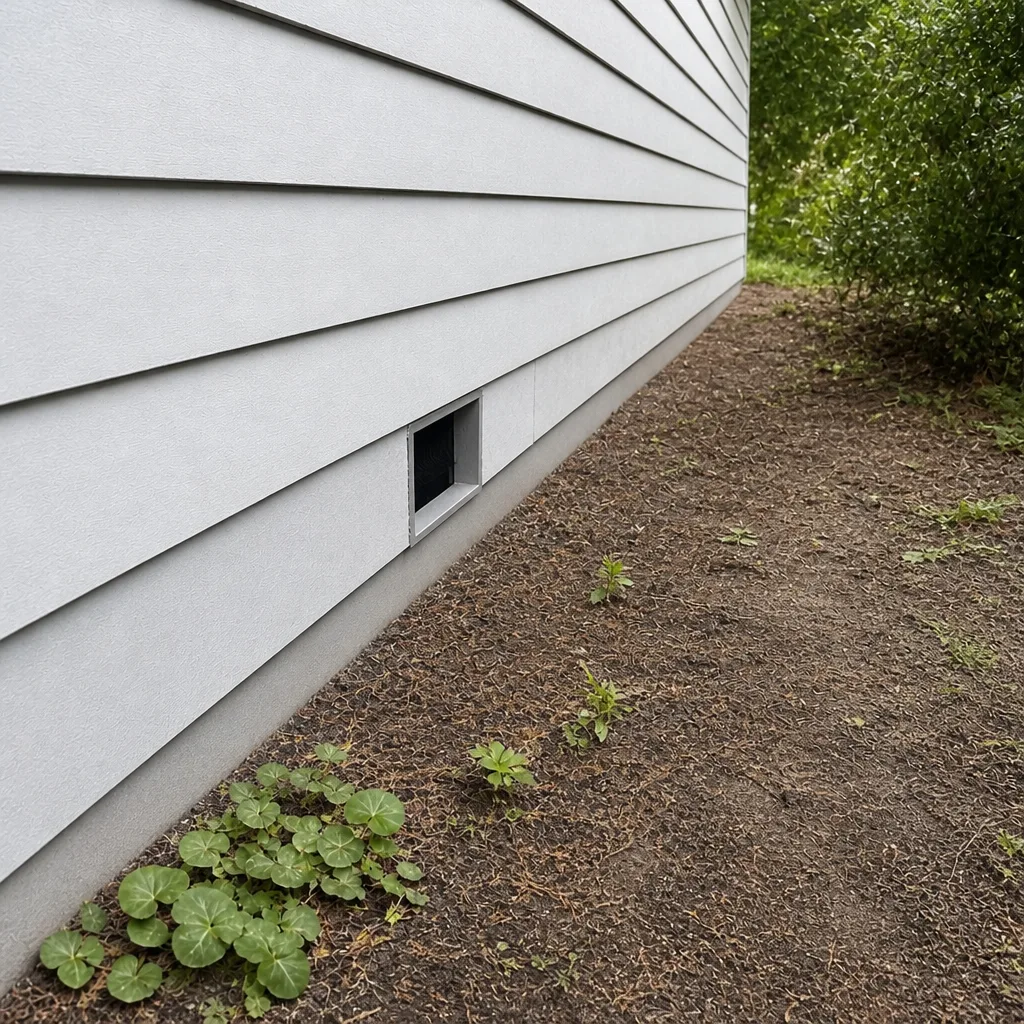
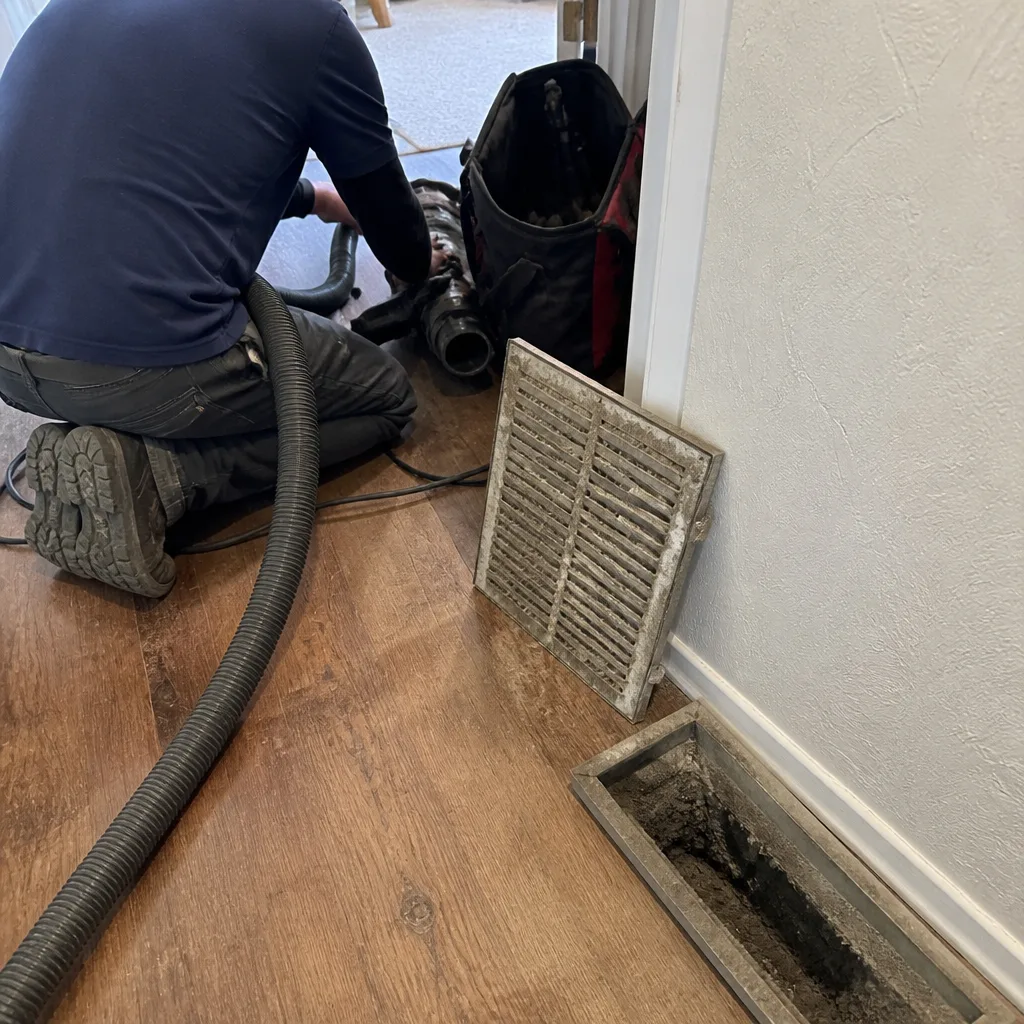
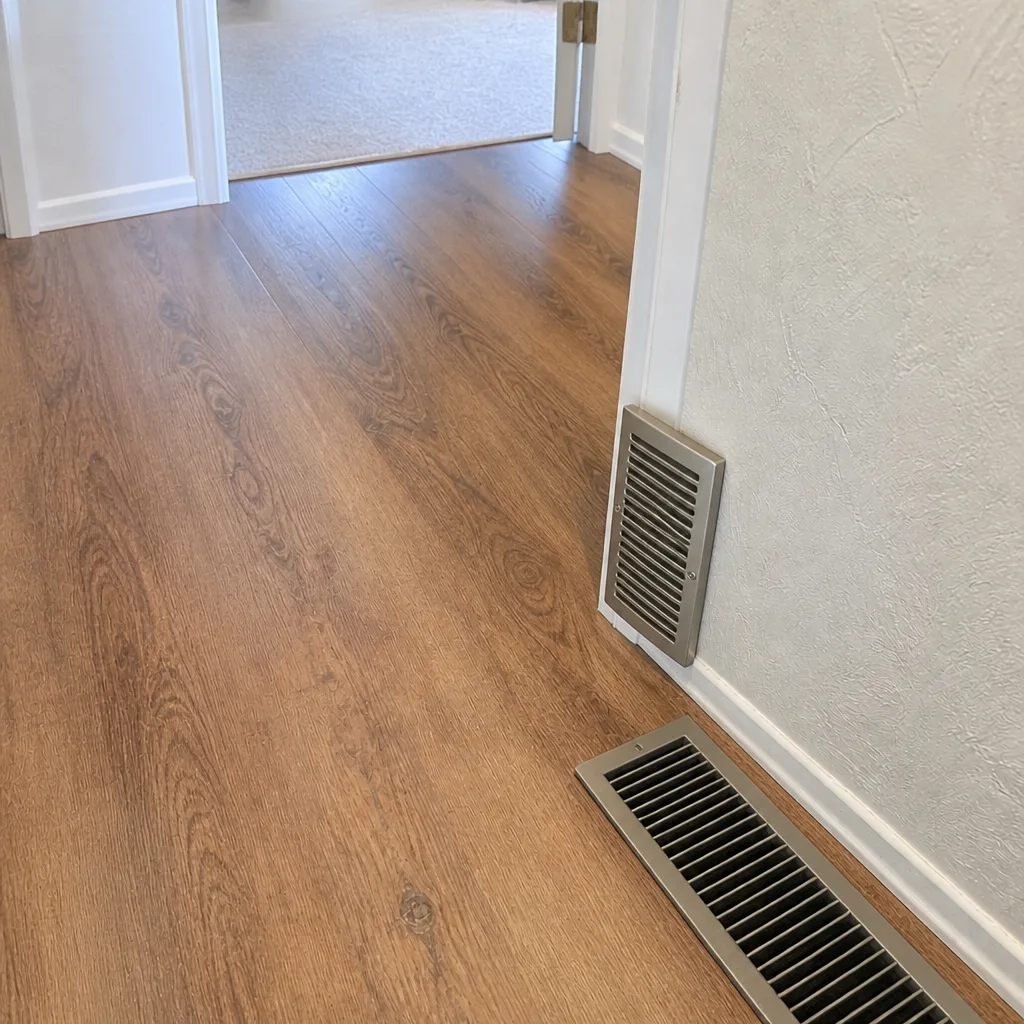
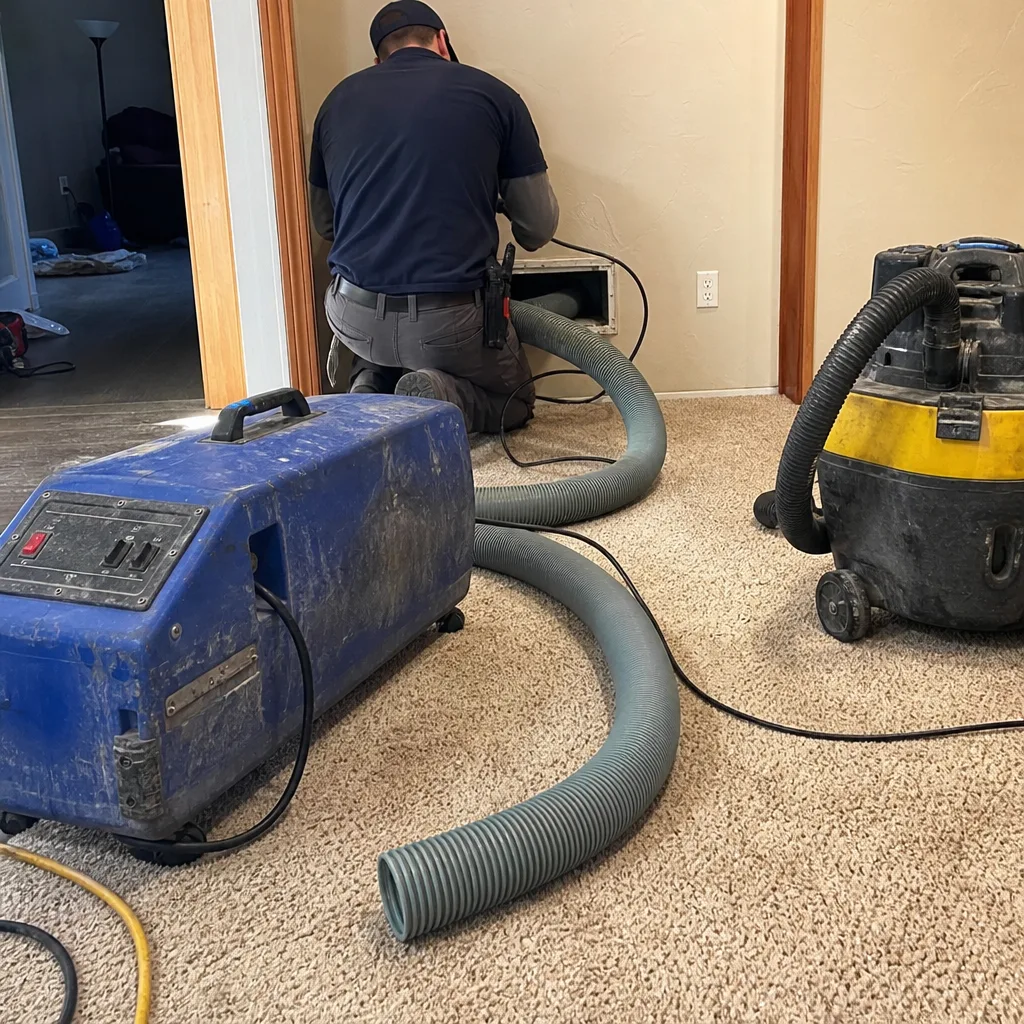
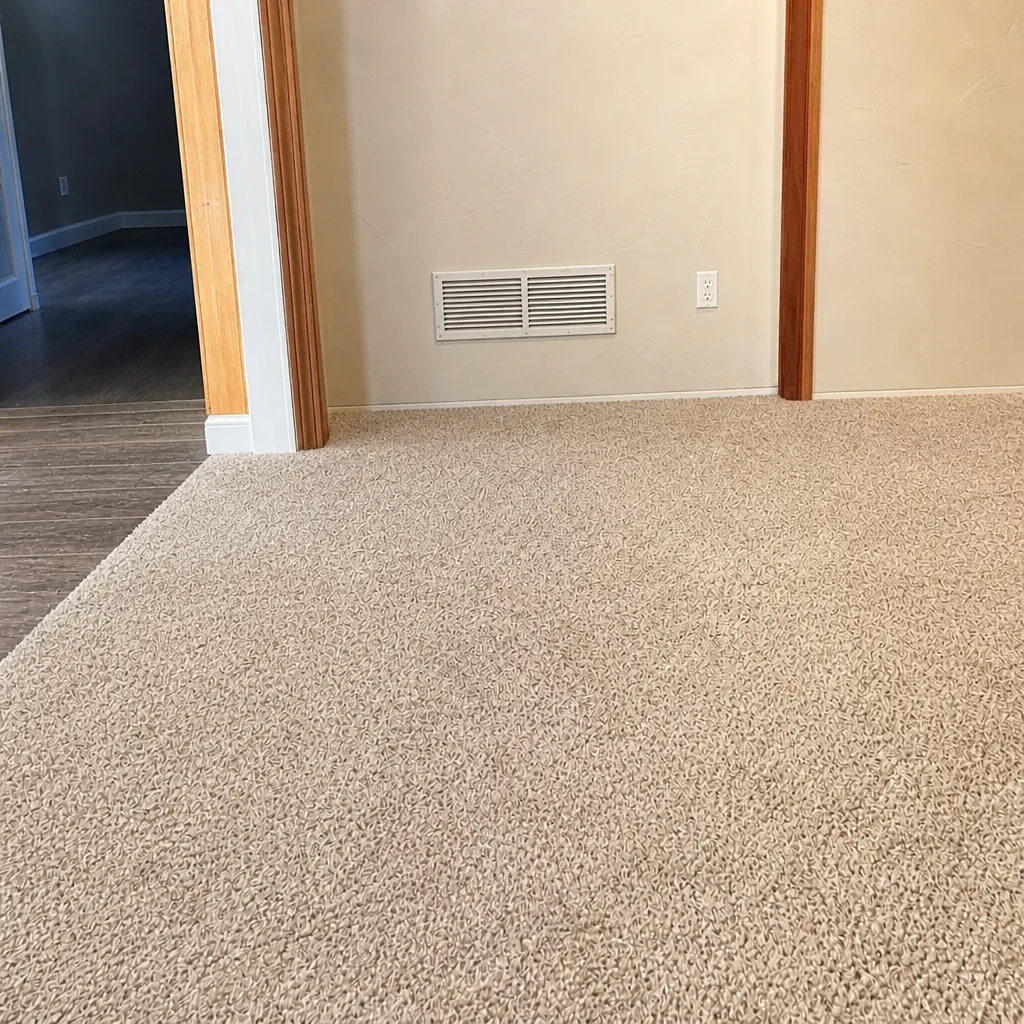
Whole-system duct and dryer vent check with before-and-after photos - you see exactly what came out of your vents
That "$99 whole-house special" is a bait ad - the real number appears once they are in your hallway, or the "clean" is a shop-vac at the register. We photograph the inside of your ducts before and after instead.
DIY vs Professional Air Duct Cleaning: The Englewood Homeowner’s Decision Guide
You can absolutely clean parts of your own duct system. That’s the part most guides won’t tell you. A shop vacuum, a long brush, and a Saturday morning will pull a real amount of dust out of the grilles and the first stretch of duct run behind them. Where the conversation gets honest is the moment you ask what’s happening past that first stretch. The contamination that actually affects the air your family breathes tends to sit on the blower wheel, the evaporator coil, and inside the return plenum, and none of those are reachable with consumer tools. This guide breaks down what’s worth doing yourself, what crosses the equipment threshold, where a DIY attempt can cost you more than it saves in an Englewood home, and how to decide which route fits your house.
Styles & brands we work with
- Whole-home duct cleaning
- Dryer vent cleaning
- Camera inspection
- Sanitizing & deodorizing
Quick Answer
DIY air duct cleaning is worth doing at the register level: grilles, vent covers, filter changes, and a visual inspection of accessible flexible duct. It is not a substitute for professional cleaning because consumer equipment can’t reach the blower wheel, evaporator coil, or return plenum where most contamination accumulates, and it can’t sustain negative pressure to keep dislodged debris from redistributing through the house. In Englewood, where homes run furnaces hard through cold winters and cooling through dry summers, that yearly cycle pushes more dust and debris into the system than many homeowners expect – which is exactly why the professional threshold matters.
Table of Contents
- What DIY Air Duct Cleaning Actually Handles
- The Equipment Threshold: Where DIY Stops
- Where DIY Attempts Can Cause Damage
- The Honest Cost Comparison
- A Decision Framework for Your Home
- Matching the Approach to Your System Type
- Englewood-Specific Considerations
- Common Mistakes to Avoid
- When to Call a Professional
- Frequently Asked Questions
- The Bottom Line
What DIY Air Duct Cleaning Actually Handles
Let’s give credit where it’s due. There’s a legitimate, useful role for homeowner-level duct maintenance, and skipping it entirely is a mistake the other direction. When we inspect a home in Englewood and the homeowner has been keeping up with the basics, the difference shows in the register areas and housing dust levels even before we run a single piece of equipment.
Here’s the short list of tasks you can do yourself, safely, without specialized tools.
- Register and grille cleaning. Pop the supply and return covers off, wash them in a utility sink with dish soap, dry them, and reinstall. Grilles collect dust passively and cleaning them reduces what blows back into the room.
- Filter replacement on a schedule. This is the single highest-impact maintenance task in any home. A dirty filter restricts airflow, stresses the blower motor, and lets particulate bypass into the system. Check the filter monthly during heavy heating or cooling seasons.
- Accessible flex duct visual inspection. Where flexible duct is exposed in a basement, garage, or crawlspace, you can look for obvious kinks, crushed sections, disconnected collars, or tears. If you see one, stop – that’s a repair job, and the local pro we connect you with handles it on the same visit.
- Surface dusting around registers. The drywall or ceiling around a supply register collects dust through normal convection. A microfiber cloth handles it.
- Return grille filter swaps. If your system uses a return-mounted filter, swapping it is a five-minute job and worth doing more often than most people do.
What home filter upgrades can do is worth considering, especially in homes with allergy sufferers. If your system runs a Honeywell or Aprilaire filter cabinet, keeping a correctly sized filter in it makes a real difference in what stays airborne.
None of this is a substitute for air duct cleaning, but it’s not wasted effort either. The register-level stuff is genuinely cleaner when you do it. Then the professional scope starts.
The Equipment Threshold: Where DIY Stops
This is where the honest conversation begins. The reason a consumer-grade shop vacuum and dryer vent brush can’t substitute for professional cleaning isn’t effort – it’s three specific equipment requirements that no reasonable homeowner can replicate.
Negative pressure. A proper cleaning pulls the entire duct system into a controlled negative-pressure state, meaning air is being drawn into the ductwork and captured, not pushed out into the room. Without negative pressure, the moment a brush or air whip dislodges a layer of debris, a portion of it becomes airborne in the living space. That’s the mechanism by which a well-intentioned DIY attempt can put more particulate into your air than was there before. Our process uses Abatement Technologies HEPA filtration on-site to capture what’s dislodged, so it doesn’t recirculate into the room.
Brush agitation matched to the duct. Surface dust on the bottom of a duct run doesn’t come off with suction alone. It needs mechanical agitation against the wall of the duct – brush heads sized to the specific duct diameter. Rotobrush and Nikro systems are built exactly for this, with rotating brush heads that reach the full circumference of the run. A hand brush can reach the bottom. It can’t reach the sides or the top.
HEPA collection at volume. Even if you could somehow agitate the entire duct, the volume of debris dislodged is beyond what a consumer vacuum’s filter can contain. Professional HEPA collection is sized for the air volume of the whole system, not one run.
There’s a fourth piece that rarely gets talked about: access. Blower wheels, evaporator coils, and the return plenum – the three most contamination-heavy components – typically require the technician to open a service panel, cut an access hole with a patchable cover, or work through the air handler itself. That’s not a tool you buy at a hardware store.
If your goal is real HVAC cleaning, the equipment threshold is the dividing line. Everything under it, you can do. Everything over it, you can’t. Knowing which is which is the whole decision.
Where DIY Attempts Can Cause Damage
We’ve seen the aftermath enough times to say it plainly: the most expensive DIY duct cleaning is the one that damaged something. Not because the homeowner did anything reckless, but because ductwork is more fragile than it looks from the outside. Here’s the specific damage patterns we see.
- Punctured flexible duct. Flex duct has a thin inner liner wrapped in insulation and a foil vapor barrier. A brush pushed too aggressively against a kink or a corner can poke through the inner liner. Once it’s compromised, that section leaks conditioned air into the crawlspace or attic, and the system loses efficiency at that run.
- Dislodged mastic joints. Seams between duct sections are sealed with mastic, and in homes of a certain age, that mastic has already started to crack. Agitating a joint that’s already failing can pull it fully apart. If it’s a joint behind a wall or above a ceiling, the repair becomes a much bigger job than the original cleaning.
- Disturbed duct board insulation. Homes built in the 1970s and 1980s sometimes have duct board (rigid fiberglass) plenums and trunks. The interior of duct board is coated with a factory seal, and rough brushing can erode that coating, exposed fiberglass fibers into the air stream. Unlike sheet metal duct, duct board doesn’t forgive rough handling.
- Crushed flex at tie-in points. A homeowner crawling into a tight attic space to inspect ductwork can inadvertently step on or lean on a run of flex duct. Crushed runs restrict airflow and need to be replaced, not just straightened.
- Air handler damage. Opening the air handler cabinet to “vacuum the blower” without knowing the sequence can damage the blower wheel balance or the electronics. It’s easy to think you’re cleaning when you’re really just disturbing a precise component.
The pattern is consistent: it’s not the debris you see that causes problems. It’s what happens to the duct itself during an attempt to remove that debris. Duct repair and sealing is part of the scope we handle, and we’d rather answer a phone call about a compromised joint than hear about one that was made worse.
The Honest Cost Comparison
The cost math most homeowners run is “professional cleaning costs the same as a shop vacuum and a weekend.” That’s not quite the real comparison. Here’s what’s actually on both sides of the ledger.
DIY cost of an air duct cleaning attempt
- Shop vacuum rental or purchase: modest but real, and a typical wet/dry vac’s filtration is nowhere near HEPA.
- Long-handled brush or flexible rod set: modest.
- Air compressor attachments if attempting blower or plenum access: variable.
- Time: four to six hours for a whole-home attempt, more if the system is complex.
- Incomplete results: the register-level debris is removed, the blower wheel, coil, and plenum are not.
- Risk cost: damaged flex, mastic, or duct board turns a maintenance project into a repair job.
Professional cleaning scope
Professional cleaning is priced per job by a written estimate, and the estimate is free. A full-system job typically covers cleaning of the supply and return runs, cleaning of the air handler components and evaporator coil, HEPA containment on-site, before-and-after photos of the actual ductwork, duct repair and sealing of any compromised joints found during the job, and a written scope of what was done. When biological contamination is present (mold spores, bacteria, or significant allergen load), we also offer air quality and sanitizing as a distinct service that goes past what vacuuming alone can remove.
The honest take: DIY is cheaper for the register-level work, and it’s the wrong tool for anything past that. If your only concern is dusty registers and a filter that fills fast, DIY plus a filter replacement schedule handles it. If your concern is anything in the blower, the coil, or the return plenum, the professional scope is the actual solution and the DIY attempt is a partial set of steps in the same direction.
The bait-and-switch hesitation is fair in this trade and worth naming: a low teaser price that balloons into a much larger invoice once the technician is on-site. We handle every job on one flat price per system, agreed before work starts, with no per-vent pricing – and clients get before-and-after photos of their own ducts. That closes the loop on the “did the work actually happen” question, which is the other half of the trust issue. Call (877) 492-4041 for an exact quote; estimates are free.
A Decision Framework for Your Home
The honest answer to “DIY or professional?” isn’t the same for every home. Four variables determine which approach fits.
Variable 1: The age of the home and the duct material
Homes with sheet metal ductwork are more forgiving of DIY register-level work than homes with flex duct or duct board. If your home was built in the last 25 years and the duct is mostly flex, DIY access is limited and the risk of damage is higher. Older homes with duct board plenums should be handled by someone who knows what they can and can’t touch inside those runs.
Variable 2: The system type
Standard forced-air systems with a single air handler and accessible ductwork are the most straightforward. Systems with zoning dampers, high-velocity (small-diameter) duct, or ductwork that runs through finished living space require more care and more equipment access. If your system runs a Honeywell zone controller or an Aprilaire bypass humidifier inline with the ductwork, the cleaning needs to respect those components rather than work around them.
Variable 3: The contamination type
This is the strongest single variable. Light household dust that you see on the registers is a DIY-level problem. Visible debris coating the blower wheel, musty odors that appear when the system runs, condensation or biological growth in the plenum, or pest evidence in the ductwork are all professional-level problems. If you aren’t sure which you have, a proper inspection is the answer – not a guess.
Variable 4: Health sensitivities in the home
Allergy sufferers, homes with young children or infants, and homes with pets that shed heavily all raise the bar for what “clean enough” actually means. If someone in the home has asthma or significant seasonal allergies through Englewood’s spring pollen season, a partial cleaning isn’t adding much. The blower and coil are where dust recirculates most and where contamination compounds over years.
The decision matrix
- Dusty registers, clean filter life normal, no odors, no health concerns: DIY register cleaning and filter maintenance is genuinely sufficient.
- Dusty registers plus filter clogging quickly, but no odors or health concerns: DIY plus a professional inspection is the right move. You may or may not need cleaning.
- Any of the following: musty odor when the system runs, visible blower or coil debris, recent renovation, recent move-in, pets, allergy sufferer in the home: professional cleaning.
- Any visible damage to ductwork (kinks, tears, disconnected runs, mastic failure): stop DIY, call for duct repair and sealing before cleaning.
Matching the Approach to Your System Type
Not all systems handle DIY the same way, and the difference matters when you’re deciding whether to pick up a brush at all.
Sheet metal ductwork
The most forgiving material for both DIY and professional cleaning, and also the easiest to inspect. Register-level cleaning is straightforward. Debris tends to accumulate along the bottom of horizontal runs and at transitions. Duct repair and sealing still matters here because mastic joints can fail.
Flexible duct
Common in homes built in the 1990s and after, especially in attic and crawlspace runs. It’s the most sensitive to DIY attempts because the inner liner is thin and easy to puncture. Barely-there registration-level cleaning is fine; aggressive brushing inside a flex run is not.
Duct board
Found in plenums and trunk lines of homes from the 1970s and 1980s, and the material where rough handling does the most damage. The factory-applied interior coating wasn’t designed for consumer brushing. A professional cleaning uses brush heads sized for duct board that clean the surface without eroding the coating. If you don’t know whether your system has duct board, that’s a question worth asking before you attempt anything past the register.
High-velocity small-diameter duct
Found in some older and some custom homes, this duct type requires specialized equipment with matched brush heads and lower-pressure cleaning to avoid damage. There’s no DIY path that makes sense here.
One more system type worth mentioning because it’s frequently ignored: the dryer vent. It’s a separate task from duct cleaning, but it’s the one that matters most for fire safety and one of the leading causes of residential fires that get ignored because it’s not what most people think of as “duct cleaning.” Standalone dryer vent cleaning is a separate service we offer and worth doing on its own schedule, whether or not you have your main ducts cleaned.
Englewood-Specific Considerations
Englewood homes put their ductwork through a specific cycle that shapes this whole decision. Cold, dry winters mean the furnace runs heavily from late fall through early spring, pulling air through the system continuously and depositing fine dust on every component. When the cooling season arrives, the evaporator coil condenses moisture from the air and becomes the wettest surface in the system – which is the surface most likely to support biological growth if fine dust and pollen from spring have accumulated on it through the heating season.
That seasonal rhythm is worth factoring into your decision. Homes in Englewood that have never had the system cleaned tend to have the most accumulation on the evaporator coil and return plenum, because that’s where the seasonal cycle deposits most of what it carries. Register-level DIY cleaning doesn’t touch anything that deep, and the spring pollen-to-summer-moisture cycle is exactly what turns the coil into a problem area.
Homes in Englewood also span a wide range of construction eras, and the duct material in your house usually tracks its build era. Older neighborhoods and mid-century homes are more likely to have duct board plenums and original sheet metal trunk lines; newer construction leans flex duct for the branch runs. That’s why the material-specific rules above matter more here than in a city with more uniform housing stock.
If you recently bought a home in Englewood or finished a renovation, the contamination picture is often more complicated than at any other time. Renovation dust is heavier than household dust and travels further into the system. We handle the full scope – cleaning, HVAC cleaning, duct repair and sealing, and air quality and sanitizing – by one provider on the same job, so you aren’t coordinating three separate contractors to close a loop that should be closed in one visit.
For a home that needs the full scope – cleaning, duct repair and sealing of any compromised joints, plus sanitizing if biological contamination is present – the difference between DIY and professional is the difference between register-level dust and a system that’s actually clean. To talk through which one your Englewood home needs, call (877) 492-4041. We answer 24/7. Fast dispatch from 7am to 7pm, Sunday through Friday.
Common Mistakes to Avoid
- Pushing a brush past a bend in flex duct. The inner liner is thinner than it looks, and a bend is where it’s most likely to puncture. If the brush feels like it’s binding, it’s binding for a reason – stop and inspect.
- Ignoring the filter schedule as “good enough.” A dirty filter doesn’t just reduce airflow. It forces the blower motor to work harder and lets particulate bypass into the system. Check monthly during heating and cooling season, not twice a year.
- Using a shop vacuum as the main cleaning tool. A shop vacuum can pull debris out of a register. It cannot sustain negative pressure on a whole system, and its filtration leaks the fine dust that matters back into the room.
- Cleaning ducts after renovation dust has already settled, without addressing the air handler. Renovation dust settles on the blower wheel and evaporator coil as well as the duct runs. Cleaning only the runs leaves the heaviest deposit untouched.
- Assuming the dryer vent is a “duct cleaning” item. It’s a separate task with its own fire safety rationale, and it’s frequently skipped because a homeowner thinks the duct cleaner will cover it. Ask for it specifically or schedule it standalone.
- Opening the air handler cabinet without knowing the sequence. Modern blower wheels are balanced to tight tolerances, and the electronics are sensitive. An attempt to “vacuum the blower” can leave the system worse than it started.
- Not taking before-and-after photos of your own ducts. If you can’t see the difference, you can’t verify the work was done. Whatever path you take, insist on visual documentation of the actual ductwork, not just a certification sticker.
When to Call a Professional
There are specific points where DIY stops making sense and a professional job is the answer. Visible debris coating the blower wheel or evaporator coil. Musty or stale odors that appear when the system starts. A recent move-in or a renovation completed within the past 12 months. Pets that shed heavily, or a household member with asthma or significant seasonal allergies. A home in Englewood that hasn’t had the system cleaned in memory and shows signs of significant filter clogging. Any visible ductwork damage – kinks, tears, disconnected runs, or failed mastic. Any suspicion of biological growth in the return plenum or on the coil.
At any of these points, the honest answer is to book an inspection first and let the scope of the job follow from what’s actually in the system. We handle the full scope in one visit: cleaning, HVAC cleaning, duct repair and sealing, air quality and sanitizing, and standalone dryer vent cleaning. Every job runs on one flat price per system, agreed before work starts, with before-and-after photos of your own ducts. Englewood Air Duct Cleaning Pros offers free estimates in Englewood – call (877) 492-4041. We answer 24/7. Fast dispatch from 7am to 7pm, Sunday through Friday.
Frequently Asked Questions
A full-system air duct cleaning in Englewood is priced per job by a written estimate, and the estimate is free. The final price depends on the size of the system, whether the ducts need repair or sealing, and whether biological contamination calls for sanitizing. The single number to look at is the flat price per system agreed before work starts – not a per-vent price, and not a teaser coupon. Call (877) 492-4041 for an exact quote.
Cheap quotes usually mean either a partial scope or unfair pricing, and the difference shows up in what’s actually cleaned. A quote that only covers the register-level runs and skips the blower wheel, evaporator coil, and return plenum isn’t the same job as full-system cleaning, and a low price that becomes a much larger invoice once the technician is on-site is the classic bait-and-switch in this trade. Ask each quote what’s covered: cleaning scope, HEPA containment on-site, before-and-after photos, and whether repair and sealing are included. Call (877) 492-4041 for a free estimate on the full scope.
Before-and-after photos of your own ducts are the way to know, and any provider worth hiring will document the job that way. Photos of the actual ductwork, not a certification sticker or a “clean bill” on paper. On our jobs, clients receive before-and-after photos of the ducts and a written scope of what was done. Call (877) 492-4041 to book an estimate and see the process up front.
Most homes in Englewood do fine on a multi-year interval, and the honest recommendation depends on what’s in the house. With pets, allergy sufferers, a recent renovation, or a recent move-in, shorter intervals are worth considering. Without any of those factors, the schedule can stretch. A filter replacement schedule – checked monthly during heavy heating and cooling seasons – matters more for ongoing maintenance than any single cleaning cadence. Call (877) 492-4041 and we’ll talk through your specific setup.
Yes, it can, and the mechanism is specific. Without negative pressure and HEPA collection, dislodged debris becomes airborne in the living space. A well-intentioned vacuum of a supply run can put some of what was coating the duct into the room air. On our jobs, Abatement Technologies HEPA filtration runs on-site to capture what’s dislodged during cleaning rather than letting it recirculate. If you’re concerned about IAQ and not just visual dust, call (877) 492-4041 for a free estimate.
Yes on both counts. Punctured flex duct, dislodged mastic joints, and disturbed duct board insulation are the most common damage patterns, and all three are repairable – duct repair and sealing is a service we offer on the same visit as the cleaning. The cleaner move is to avoid the damage altogether by stopping DIY at the register level. Call (877) 492-4041 with any damage question; estimates are free.
The Bottom Line
DIY air duct cleaning has a real, useful place in a homeowner’s maintenance routine – register cleaning, filter changes, accessible duct inspection. It doesn’t have a place as a substitute for professional cleaning, because the components where most contamination actually accumulates are beyond the reach of consumer tools. Negative pressure, brush agitation, and HEPA collection are the three equipment requirements that separate the two approaches. In an Englewood home, the seasonal heating-to-cooling cycle makes the blower wheel, evaporator coil, and return plenum the places to watch, and those are exactly the places a shop vacuum can’t clean. The decision framework is simple: home age and material, system type, contamination type, and health sensitivities. If any of the last two is a concern, professional cleaning is the answer.
We work on the systems you already own – Honeywell, Aprilaire, and most major residential HVAC brands – and we handle the whole duct system on one visit: cleaning, HVAC cleaning, duct repair and sealing, air quality and sanitizing, and standalone dryer vent cleaning. One flat price per system, agreed before work starts, with before-and-after photos of your own ducts. Our technicians have up to 8 years of experience, and every estimate is free. To talk through your specific home, call Englewood Air Duct Cleaning Pros at (877) 492-4041. We answer 24/7. Fast dispatch from 7am to 7pm, Sunday through Friday.
Written by the team at Englewood Air Duct Cleaning Pros.
See the difference
 Before
 After
 Before
 After
 Before
 After